Blog

4 Impressive Features of the 2020 Jeep Gladiator

Jeep Gladiator

Jeep trucks are the stuff of folklore. Starting in 1947, Jeep produced the one-ton Willys Wheeler, which is now a highly sought-after collectible. After a mishmash of trucks through the years that were loved by Jeep fans but panned by critics, 1985 saw the release of the acclaimed Jeep Comanche. In 1992, it disappeared from assembly lines. Nearly three decades later, the void has finally been filled with the 2020 Jeep Gladiator. Taking pieces of the legendary Jeep Wrangler, this pickup is a beast through and through. Here's a look at all it has to offer in 2020.

1. Superb Power and Performance

The 2020 Jeep Gladiator gets its performance cues from the Jeep Wrangler, sporting the same engine that's found in the 2019 Jeep Wrangler. This 3.6-liter V-6 behemoth churns out 285 horsepower and 260 pound-feet of torque behind a standard six-speed manual transmission. If you're averse to the stick shift, an eight-speed automatic transmission is optional. While Jeep has yet to release acceleration numbers, the Gladiator is sure to burn some serious rubber.

In addition to its speed, the 2020 Jeep Gladiator also has some of the top towing numbers in the industry. When properly equipped with the Max Towing package, this pickup touts a best-in-class 7,650 pounds of towing capacity to go along with a maximum payload of 1,600 pounds. Whether you're on the job site or doing a full-scale DIY project, the 2020 Gladiator has you covered.

2. The Diesel Rumor

Details are still scant, but Jeep has rumored that a diesel version of the 2020 Jeep Gladiator will hit showrooms sometime later this year. Supposedly, this engine will take towing and off-roading to a new level thanks to 260 horsepower and a thunderous 442 pound-feet of torque. Only time will tell if this rumor is legitimate, but if it is, Jeep fans should rejoice.

3. The Open-Air Approach

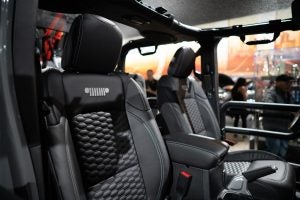
Courtesy of a removable top, removable doors, and a class-exclusive fold-down front windshield, the 2020 Jeep Gladiator is the world's only open-air truck. Borrowing this style from the Jeep Wrangler, the Gladiator brings you one step close to the great outdoors. Whether you're blazing new trails in the forest or going for a sunrise ride on the beach, the Gladiator brings you one step closer to nature.

4. Tech Features

Upscale tech features abound in the 2020 Jeep Gladiator. Designed to maintain its utilitarian appeal with a touch of modernity, the Gladiator boasts a comprehensive array of tech specs that will delight just about any tech guru. Highlights include an 8.4-inch color touch-screen display, the Uconnect infotainment system, Android Auto, and Apple CarPlay. However, the most alluring feature is a portable Bluetooth stereo. With Bluetooth connectivity, this removable stereo plays your favorite jams anywhere you go. Simply unlatch it from its holding block, pair it with your mobile device, and you have a party waiting to happen.

Expertly designed, full of ferocity, and with an added touch of something that only Jeep can provide, the 2020 Gladiator is the truck to have this year. Chances are it might just turn a few heads with you behind the wheel.

Image via Flickr by nan palmero

Recommended Posts

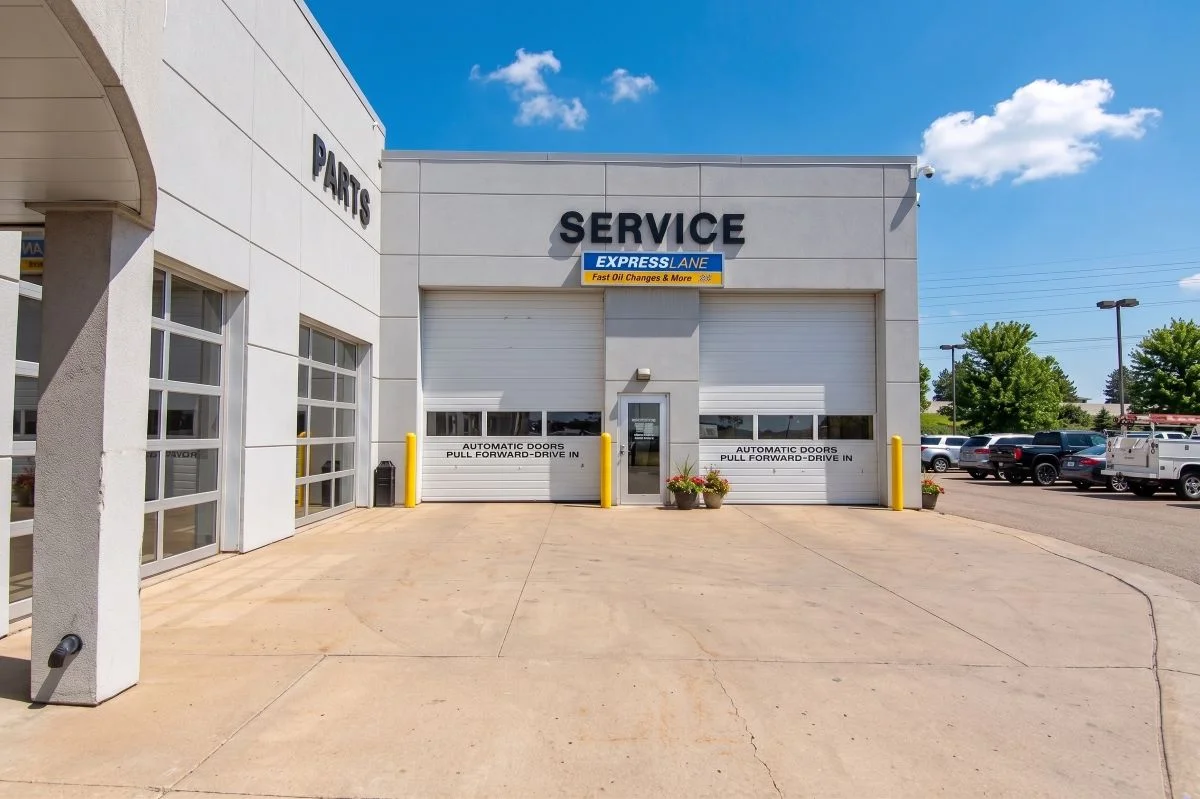
Mopar Express Lane oil change entrance at Fremont Chrysler Dodge Jeep Ram Casper in Casper WY

How Often Does a RAM 1500 Need An Oil Change in WY

Quick Jump: Oil Capacity & Viscosity by Engine Wyoming Driving Intervals Hurricane I-6 vs. HEMI® V8 Oil Casper Express Lane & Fremont Care Ram 1500 Oil FAQs Quick Answer: Ram 1500 Oil Change Intervals for Wyoming Drivers In Wyoming, most Ram 1500 trucks require a full synthetic oil and Mopar® filter change every 3,500 to 5,000 miles (or every 4 to 6 months). Because sub-zero Natrona County cold starts (below 32°F / 0°C), high-altitude towing over Casper Mountain or along WY-220, extended winter warm-up idling, short city trips under 10 miles, and dusty ranch or oilfield roads all qualify as Severe Duty under Ram's official Owner's Manual schedule, changing oil at 5,000-mile intervals protects turbocharger bearings, timing chains, and hydraulic lifters from fuel dilution and thermal breakdown. If your driving consists primarily of mild-weather highway commuting on I-25 without heavy towing or extended idling, you can follow your truck's Intelligent Oil Life Indicator (OILI) —typically every 6,000 to 7,500 miles (or 6 months). Under factory warranty guidelines, never exceed 10,000 miles, 12 months, or 350 engine operating hours on 3.6L Pentastar® V6, 3.0L Hurricane Twin-Turbo I-6, or 5.7L HEMI® V8 models (or 6,000 miles / 6 months on 6.2L Supercharged HEMI® V8 TRX models). 3,500–5,000 Miles Wyoming Severe-Duty Interval: Sub-32°F winter cold starts, trailer towing, winter idling, short trips & gravel ranch roads (4–6 months). 6,000–7,500 Miles Normal Highway Interval: Mild-weather I-25 & US-20/26 highway commuting using factory-spec Pennzoil® full synthetic oil (6 months). 10,000 Mi / 12 Mos Absolute Factory Cap: Never exceed 10,000 miles, 12 months, or 350 engine hours (6,000 miles / 6 months max on 6.2L TRX SRT). Visit Casper Mopar® Express Lane (No Appt) Schedule Service Online View Service & Oil Specials Ram 1500 Oil Capacity, SAE Viscosity & Mopar® Spec Chart by Engine Selecting the wrong oil viscosity can trigger check-engine faults on 5.7L HEMI® V8 Multi-Displacement System (MDS) solenoids or starve twin-turbocharger bearings on 3.0L Hurricane I-6 engines during sub-zero Casper startups. Review the verified OEM factory specifications below: Ram 1500 Engine & Output Model Years & Trims Oil Capacity (With Filter)* Factory Oil Viscosity & Mopar® Standard Recommended Wyoming Interval 3.0L Hurricane I-6 Twin-Turbo Standard Output (SO) 420 hp / 469 lb.-ft. 2025–2027 Tradesman, Express, Warlock, Big Horn, Laramie & Rebel 7.5 Quarts (7.1 Liters) SAE 0W-20 Full Synthetic Pennzoil Ultra Platinum™ GF-6+ (API SP / Mopar® MS-13340) 3,500–5,000 mi (Winter / Towing) 6,000–7,500 mi (Normal Hwy) Max cap: 10,000 mi / 12 mos 3.0L Hurricane I-6 Twin-Turbo High Output (HO) 540 hp / 521 lb.-ft. 2025–2027 RHO, Limited, Longhorn & Tungsten 7.5 Quarts (7.1 Liters) SAE 0W-40 Full Synthetic Pennzoil Ultra Platinum™ API SP (Mopar® MS-A0921) 3,500–5,000 mi (Winter / Off-Road / Tow) 6,000 mi (Normal Hwy) Max cap: 10,000 mi / 12 mos 3.6L Pentastar® V6 eTorque 305 hp / 269–271 lb.-ft. 2019–2027 Tradesman, Express, Big Horn & Rebel (5W-20 on 2013–2018 Classic) 6.0 Quarts (5.7 Liters) SAE 0W-20 Full Synthetic API SP / ILSAC GF-6A (Mopar® MS-6395) 4,000–5,000 mi (Winter / Short Trips) 6,000–7,500 mi (Normal Hwy) Max cap: 10,000 mi / 12 mos 5.7L HEMI® V8 & 5.7L HEMI® V8 eTorque 395 hp / 410 lb.-ft. 2009–2024 & 2026–2027 Tradesman, Big Horn, Laramie, Rebel, Longhorn, Limited & Rumble Bee 7.0 Quarts (6.6 Liters) SAE 5W-20 (or 0W-20 by MY) API SP Full Synthetic (Mopar® MS-6395 — required for MDS cylinder deactivation) 3,500–5,000 mi (Winter / Towing / Idle) 6,000–7,500 mi (Normal Hwy) Max cap: 10,000 mi / 12 mos 6.4L HEMI® V8 (392) 470 hp / 455 lb.-ft. 2027 Rumble Bee 392 & Rumble Bee 392 Track Pack 7.0 Quarts (6.6 Liters) SAE 0W-40 Full Synthetic Pennzoil Ultra Platinum™ (Mopar® MS-A0921) 3,500–5,000 mi (Winter / Performance) 6,000 mi (Normal Hwy) 6.2L Supercharged HEMI® V8 702–777 hp / 650–680 lb.-ft. 2021–2024 TRX & 2027 TRX SRT / Rumble Bee SRT 7.9 Quarts (7.4L) on 777-hp TRX SRT (7.0 Quarts w/ filter on 2021–2024 TRX) SAE 0W-40 Full Synthetic Pennzoil Ultra Platinum™ (Mopar® MS-A0921) 3,000–4,000 mi (Off-Road / Winter) Strict Factory Cap: 6,000 mi / 6 mos 3.0L EcoDiesel V6 Turbo Diesel 240–260 hp / 420–480 lb.-ft. 2014–2023 Pre-Owned Ram 1500 EcoDiesel 8.5 Quarts (8.0L) on Gen 3 (2020–2023) 10.5 Quarts on Gen 2 (2014–2019) SAE 5W-40 Full Synthetic Diesel API CK-4 Low-Ash (Mopar® MS-12991) 5,000 mi (Winter Idle / Towing / B20) 7,500–10,000 mi (Normal Hwy) Why Central Wyoming Driving Qualifies as "Severe Duty" for Your Ram 1500 Many truck owners see "up to 10,000 miles" in a general maintenance brochure without reading the severe-duty footnotes in the Ram 1500 Owner's Manual. At 5,150 feet of elevation in Casper —and up to 7,990 feet on Casper Mountain —nearly every local truck encounters at least two of the four conditions below: Wyoming Driving Condition Local Natrona County Examples How It Degrades Ram 1500 Engine Oil Recommended Oil & Filter Interval 1. Sub-Zero Cold Starts & Short Trips (<32°F / 0°C) Morning starts between -20°F and 25°F across Casper, Mills, Evansville & Bar Nunn; commutes under 8–10 miles along East 2nd St or CY Ave Cold enrichment injects extra fuel that washes past piston rings into the crankcase, while condensation fails to boil off below 212°F oil temp—forming acidic sludge Every 3,500 to 4,500 Miles (or every 4–5 months; always change before November freeze and again in spring) 2. High-Altitude Trailer Towing & Mountain Grades Towing boats, campers, or horse trailers (up to 11,370 lbs. on Ram 1500 4x4 Quad Cab 3.0L SO w/ 3.92 axle)* up WY-251 (Casper Mountain), WY-220 to Alcova/Pathfinder, or I-25 grades Sustained turbo boost (up to 22–26 psi on Hurricane I-6) and high RPM shear polymer viscosity modifiers and spike oil sump temperatures above 240°F Every 4,000 to 5,000 Miles (inspect oil level on the dipstick before every long mountain haul) 3. Extended Winter Idling & Jobsite Operation Remote-starting to defrost windshields, jobsite idling on Natrona County ranch or energy leases, or slow-speed 4WD Low work 1 hour of engine idling equals roughly 30 to 33 miles of highway wear with low oil pump pressure at the camshaft lobes and lifters Every 4,000 Miles or 200–250 Engine Hours (never exceed Ram's 350-hour maximum limit) 4. Dusty Ranch, Gravel & Two-Track Roads Driving on unpaved county roads toward Shirley Basin, Powder River, Poison Spider Road, or Alcova backcountry Airborne alkali and silica dust challenge air filtration; microscopic particulates suspended in engine oil accelerate timing chain and ring wear Every 3,500 to 5,000 Miles (inspect engine air filter at every oil change) 5. Mild-Weather Highway Commuting Unloaded highway trips at steady speeds along I-25 between Casper, Glenrock & Douglas between May and September Oil reaches optimal 200°F–220°F operating temperature, evaporating moisture and fuel vapor cleanly through the PCV system Every 6,000 to 7,500 Miles (or every 6 months using full synthetic oil) Engine-Specific Oil Requirements: 3.0L Hurricane I-6 vs. 5.7L HEMI® V8 vs. 3.6L Pentastar® V6 Whether you drive a brand-new Ram 1500 4x4 from our East 2nd Street showroom or a proven pre-owned Ram 1500, each engine architecture has distinct lubrication engineering: 1. 3.0L Hurricane Twin-Turbo I-6 (SO vs. HO): Why 0W-20 and 0W-40 Cannot Be Swapped 7.5-Quart Die-Cast Aluminum Sump: Both the 420-hp Standard Output (SO) and 540-hp High Output (HO) 3.0L Hurricane engines hold exactly 7.5 quarts (7.1 liters) of oil with a new filter and feature plasma-transfer wire arc (PTWA) spray-bore cylinder walls, DLC-coated piston pins, and 5,075-psi (350-bar) direct fuel injection. Standard Output (420 hp) Uses 0W-20 (MS-13340): Factory-filled with Pennzoil Ultra Platinum™ 0W-20 GF-6+ (API SP) to maximize cold-cranking oil flow at -25°F and protect against Low-Speed Pre-Ignition (LSPI). High Output (540 hp on RHO, Limited, Longhorn & Tungsten) Requires 0W-40 (MS-A0921): Because the HO engine runs higher turbo boost (up to 26 psi) and forged aluminum pistons at 9.5:1 compression, it requires Pennzoil Ultra Platinum™ 0W-40 API SP (MS-A0921) for high-temperature film strength. Never put 0W-20 into a 540-hp High Output Hurricane engine. 2. 5.7L HEMI® V8 & eTorque: Protecting MDS Solenoids & Roller Lifters 7.0-Quart Capacity & MS-6395 Specification: The 395-hp 5.7L HEMI® V8 (including 2026–2027 eTorque and Rumble Bee models) holds 7.0 quarts (6.6 liters) with filter. Why Viscosity Matters for MDS: The 5.7L HEMI® V8's Multi-Displacement System (MDS) relies on precise oil viscosity and hydraulic pressure through four cylinder-deactivation solenoids and 16 hydraulic roller lifters. Pouring in heavy 10W-30 or 15W-40 oil—especially in a Casper winter—can trigger Check Engine codes (such as P1524 Oil Pressure Out of Range) and delay oil flow to the upper valvetrain. Minimizing Idle Hours: Because cam lobes in pushrod V8s rely on crankshaft splash and lifter gallery flow that increases with RPM, sticking to a 4,000- to 5,000-mile full synthetic schedule with a genuine Mopar® anti-drainback filter (`MO-339`) is the single best defense against premature lifter wear. 3. 3.6L Pentastar® V6 eTorque: 6.0 Quarts & Cartridge Filter Care 6.0-Quart Capacity: The 305-hp 3.6L Pentastar® V6 eTorque holds 6.0 quarts (5.7 liters) with filter and specifies SAE 0W-20 full synthetic (MS-6395 / API SP) on 2019–2027 fifth-generation DT trucks. Top-Mounted Cartridge Filter (`MO-349`): The Pentastar® V6 uses a top-mounted oil filter housing with an o-ring seal. Our factory-certified Mopar® technicians torque the filter cap to exact specification (`25 N·m / 18 lb.-ft.`) and replace the o-ring at every service to prevent cold-weather oil filter housing leaks. 4. 6.2L Supercharged HEMI® V8 (TRX / SRT) & 6.4L HEMI® V8 (392) Strict 6,000-Mile / 6-Month Cap on TRX SRT: High-performance 6.2L Supercharged HEMI® V8 models (702 hp on 2021–2024 TRX; 777 hp / 680 lb.-ft. on 2027 TRX SRT with 7.9 quarts capacity) and 6.4L HEMI® V8 Rumble Bee 392 models (470 hp, 7.0 quarts) require Pennzoil Ultra Platinum™ 0W-40 (MS-A0921). Severe Off-Road & Cold Weather: If you run your Ram 1500 TRX or RHO in sand, mud, or sub-zero Wyoming snow, shorten oil changes to every 3,000 to 4,000 miles. No-Appointment Mopar® Express Lane: Pull straight into our Express Lane at 6101 E 2nd St, Casper, WY 82609 for Pennzoil® synthetic oil and genuine Mopar® filter changes. Factory-Certified Technicians: Every oil change includes a multi-point check of your AGM battery CCA, coolant freeze protection, brakes, and 4x4 driveline. 3.0L Hurricane & HEMI® V8 Expertise: We stock exact-spec Pennzoil Ultra Platinum™ 0W-20 (MS-13340), 0W-40 (MS-A0921), and 5W-20 (MS-6395) oils. Where to Get a Ram 1500 Oil Change in Casper, WY (Plus Fremont Care Benefits) At Fremont Chrysler Dodge Jeep Ram Casper —your authorized car dealership in Casper, WY at 6101 E 2nd St (just off I-25 Exit 185 and SE Wyoming Blvd)—we make keeping your Ram 1500 on a Wyoming-ready maintenance schedule fast and convenient: 1. Mopar® Express Lane (No Appointment Needed) Skip the wait: drive directly into our Mopar® Express Lane at 6101 E 2nd St for a fast oil and genuine Mopar® filter change, 4-tire rotation, chassis inspection, and H7 730-CCA AGM battery test—no appointment required. 2. Fremont Care on Eligible Vehicle Purchases* Purchasing a new or qualifying pre-owned Ram 1500 from us? Fremont Care comes with eligible vehicle purchases at Fremont CDJR Casper, providing 2 oil changes and 2 tire rotations within the initial 12 months of ownership ( see Fremont Care details)*. 3. Genuine Mopar® Filters & Warranty Records Quick-lube chains often install generic filters that lack the silicone anti-drainback valve pressure rating required for cold-weather HEMI® V8 and Hurricane I-6 starts. Our Mopar® Service Center uses OEM filters and logs every visit to your official Mopar® warranty history. How to Check & Reset Your Ram 1500 Oil Life Indicator After an Oil Change When our technicians service your truck at 6101 E 2nd St, we reset your digital oil life monitor automatically. If you ever need to check your remaining oil life percentage or reset the alert manually from the driver's seat, follow these steps: Step 1 (Ignition to ON/RUN): Without pressing the brake pedal, push the ENGINE START/STOP button twice so the ignition enters the ON/RUN position with the engine off. Step 2 (Navigate Cluster Menu): Use the left-hand steering wheel directional buttons to open the Vehicle Info menu on your digital gauge cluster and scroll to the Oil Life screen. Step 3 (Hold OK to Reset): Press and hold the OK button (or right arrow button on select cluster layouts) until the gauge resets to 100%. (Fallback pedal method on older models: with ignition in ON/RUN and engine off, fully depress and release the accelerator pedal slowly 3 times within 10 seconds, then turn ignition OFF.) Ram 1500 Oil Change in Wyoming — Frequently Asked Questions Click any question below for verified answers on Ram 1500 oil capacities, viscosity grades, Wyoming severe-duty intervals, and service at Fremont CDJR Casper: How often does a Ram 1500 need an oil change in Wyoming? + In Wyoming, most Ram 1500 owners should change their oil every 3,500 to 5,000 miles (or every 4 to 6 months) because sub-zero winter cold starts (below 32°F), mountain towing, winter warm-up idling, short trips under 10 miles, and dusty gravel roads qualify as Severe Duty. For mild-weather highway driving, change full synthetic oil every 6,000 to 7,500 miles, and never exceed the factory cap of 10,000 miles, 12 months, or 350 engine hours (or 6,000 miles / 6 months on 6.2L TRX SRT models). How many quarts of oil does a Ram 1500 take with a filter change? + By engine with a new filter: the 3.6L Pentastar® V6 eTorque takes 6.0 quarts (5.7 liters); the 5.7L HEMI® V8 / eTorque and 6.4L HEMI® V8 (392) take 7.0 quarts (6.6 liters); both the 420-hp Standard Output and 540-hp High Output 3.0L Hurricane Twin-Turbo I-6 engines take 7.5 quarts (7.1 liters); the 777-hp 6.2L Supercharged HEMI® V8 (TRX SRT) takes 7.9 quarts (7.4 liters); and pre-owned 3.0L EcoDiesel V6 models take 8.5 quarts (2020–2023 Gen 3) or 10.5 quarts (2014–2019 Gen 2). What type of oil does the 3.0L Hurricane Twin-Turbo I-6 Ram 1500 require? + It depends on output level: the 420-hp 3.0L Hurricane Standard Output (SO) requires 7.5 quarts of Pennzoil Ultra Platinum™ SAE 0W-20 full synthetic (API SP / GF-6+ / Mopar® MS-13340), while the 540-hp 3.0L Hurricane High Output (HO) (on RHO, Limited, Longhorn, and Tungsten) requires 7.5 quarts of Pennzoil Ultra Platinum™ SAE 0W-40 full synthetic meeting Mopar® MS-A0921 (API SP). What oil weight does a 5.7L HEMI® V8 Ram 1500 use? + The 5.7L HEMI® V8 (including eTorque models) requires 7.0 quarts of SAE 5W-20 (or SAE 0W-20 as specified on the oil filler cap of select newer model years) meeting Mopar® Material Standard MS-6395 and API SP. Using heavier viscosity oil can interfere with the Multi-Displacement System (MDS) cylinder deactivation solenoids and trigger a Check Engine light. Do I need an appointment for a Ram 1500 oil change at Fremont CDJR Casper? + No appointment is needed at our Mopar® Express Lane at 6101 E 2nd St, Casper, WY 82609. You can also schedule a service appointment online or call our service advisors at (307) 462-5514. Does Fremont Care include oil changes on a Ram 1500 purchased at Fremont CDJR Casper? + Yes. Fremont Care comes with eligible vehicle purchases —including new Ram 1500 trucks and qualifying pre-owned vehicles—at Fremont Chrysler Dodge Jeep Ram Casper. It provides 2 oil changes and 2 tire rotations within the initial 12 months of ownership. Ready for Your Next Ram 1500 Oil Change in Casper, WY? Pull into the no-appointment Mopar® Express Lane at Fremont Chrysler Dodge Jeep Ram Casper (6101 E 2nd St, Casper, WY 82609) or call (307) 462-5514 for factory-certified Pennzoil® full synthetic service. Mopar® Express Lane Info Book Service Online Shop New Ram 1500 4x4s * Maintenance, Capacity, Towing & Fremont Care Disclosures: Always consult your specific model-year Ram 1500 Owner's Manual and under-hood engine oil filler cap for exact SAE viscosity grade, Mopar® material standard (MS-6395, MS-13340, MS-A0921, or MS-12991), and dipstick fill level verification. Up to 11,370 lbs. max 4x4 towing rating applies to a Ram 1500 Tradesman 4x4 Quad Cab 6'4" Box equipped with the 420-hp 3.0L Hurricane SO Twin-Turbo I-6, 8HP75 8-speed automatic transmission, and 3.92 axle ratio when properly equipped. Fremont Care comes with eligible vehicle purchases (new Chrysler, Dodge, Jeep, and Ram vehicles and qualifying pre-owned vehicles at Fremont Chrysler Dodge Jeep Ram Casper) and provides 2 oil changes and 2 tire rotations within the initial 12 months of ownership; excludes new vehicles that include an active OEM maintenance package from new. See dealer at 6101 E 2nd St, Casper, WY 82609 for complete details.
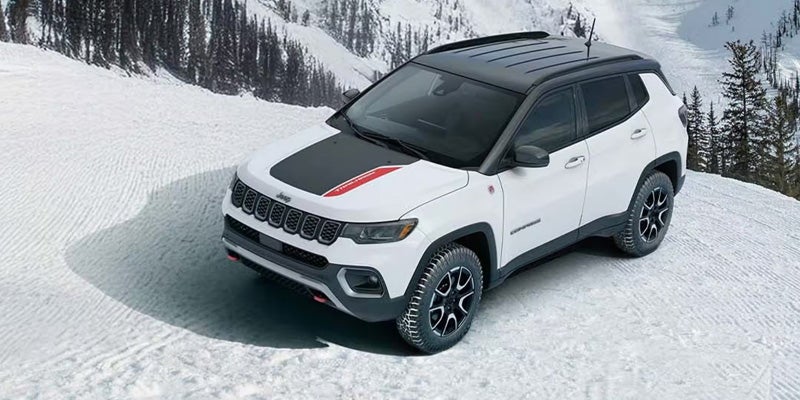
Jeep Compass in the snow

5 Cold-Weather Checks for Your Jeep in Casper

Winter in Natrona County delivers sudden sub-zero cold snaps, intense crosswinds along Interstate 25, and heavy snow accumulations on Casper Mountain. While every Jeep 4x4 comes engineered with trail-proven capability, extreme cold places severe mechanical stress on electrical components, rubber compounds, fluids, and traction hardware. Completing these five essential cold-weather inspections protects your vehicle and keeps your 4x4 operating with confidence all winter long. Quick Summary: The 5 Essential Jeep Winter Checks 1. Battery Cranking Power: Test Cold Cranking Amps (CCA) and inspect dual-battery systems before sub-zero overnight freezes. 2. 4x4 & Selec-Terrain® Verification: Confirm transfer case low-range engagement and Snow mode operation for icy Casper intersections. 3. Tire Siping & Cold PSI: Verify at least 5/32-inch tread depth and adjust tire pressures for winter temperature drops. 4. Mopar OAT Coolant Protection: Test antifreeze freeze protection down to -35 degrees Fahrenheit and check cabin heater core flow. 5. Winter Wipers & Sub-Zero Fluid: Install winter-beam blades to resist ice buildup and fill reservoirs with -30 degree washer fluid. 1. Test Battery Cold Cranking Amps (CCA) and Dual-Battery Systems Automotive battery chemistry slows down dramatically in cold weather. At 32 degrees Fahrenheit, a standard 12-volt automotive battery loses approximately 20% to 35% of its rated electrical strength. When overnight temperatures in Casper drop to -15 degrees Fahrenheit, available cranking power falls by more than 50%, precisely when thick, cold engine oil demands up to two times more energy to spin the starter motor. Jeep Dual-Battery & AGM System Demands Many modern Jeep models (including the Wrangler JL, Gladiator JT, and Grand Cherokee) utilize an advanced Stop/Start system equipped with either a secondary auxiliary battery or a high-capacity Absorbent Glass Mat (AGM) primary unit: Auxiliary Battery Isolation: If the auxiliary battery drops below its required operating voltage, it can draw parasitic power from the main starting battery, resulting in unexpected no-start conditions on cold Casper mornings. Electronic 4x4 System Dependencies: Low system voltage triggers electronic faults that can temporarily disable electric sway-bar disconnects, rear locker actuators, and Selec-Terrain drive mode selections. Professional Conductance Testing: A simple voltage test using a multimeter only reads surface charge. Our certified technicians at Fremont CDJR Casper use specialized digital conductance analyzers to measure actual Cold Cranking Amps under simulated load, pinpointing weak cells before the first major freeze. 2. Verify Jeep 4x4 Transfer Case and Selec-Terrain® Operation Driving through winter in Central Wyoming involves transitioning from dry asphalt to packed snow drifts and icy bridges across the North Platte River. Your Jeep vehicle's four-wheel-drive system relies on precise mechanical actuators and electronic control modules that need verification before winter weather hits. Exercising 4WD Hardware and Snow Mode Settings Cold temperatures thicken transfer case and differential fluids, making pre-season exercise critical: Cycle Through 4WD Modes: On a loose gravel surface or safe unpaved lot, shift your transfer case through 4H Auto, 4H Part-Time, and 4L Low. Exercising the mechanical shift collar and electric shift motor circulates synthetic lubricant and prevents the actuator from sticking during your first winter storm. Selec-Terrain® Snow Mode Calibration: On equipped Compass, Cherokee, and Grand Cherokee models, turning the Selec-Terrain dial to "Snow" configures the drivetrain specifically for slick road conditions. The system splits engine torque roughly 50/50 between front and rear axles, programs the transmission to start in second gear to minimize initial wheel spin, and recalibrates the anti-lock brake system (ABS) to detect wheel slippage early. Differential Fluid Inspection: Check front and rear differential lubricants for moisture contamination. In extreme sub-zero conditions, water-contaminated gear oil can freeze into ice crystals, starving pinion bearings of lubrication. 3. Inspect Tire Tread Depth, Winter Siping, and Cold Inflation Pressures Tires are the single physical connection between your Jeep and snow-covered Wyoming highways. While all-terrain and mud-terrain tires feature aggressive tread blocks, rubber compound hardness and tread design dictate how effectively your vehicle stops on ice. Tire Type Cold Rubber Flexibility Ice & Packed Snow Grip Recommended Casper Application Winter Tires (3PMSF-Rated) Stays flexible below -30 degrees F Maximum (high-density zigzag sipes) Daily commuting on I-25, WY-220, and Casper Mountain All-Weather (3PMSF Rated) Stays flexible below 45 degrees F High (engineered directional sipes) Year-round town and highway driving without seasonal swaps Standard All-Season Hardens below 45 degrees F Moderate to Low (slips on ice) Mild climates; requires extra stopping distance in Casper Mud-Terrain (M/T) Hardens significantly in sub-zero temps Poor on ice (large blocks lack siping) Deep snow off-road only; prone to sliding on hard-pack street ice The 5/32-Inch Winter Tread Rule & Cold Pressure Drops Keep these two tire guidelines in mind for Casper winter driving: Minimum Winter Tread Depth: While 2/32-inch is the legal wear limit in many states, winter driving requires a minimum of 5/32-inch to evacuate slush and pack snow into the sipes for traction. Anything less leaves your Jeep susceptible to hydroplaning over winter slush. The 10-Degree Pressure Rule: For every 10-degree drop in outside temperature, tire inflation pressure drops approximately 1 to 2 PSI. A Jeep parked outside during a sudden Casper temperature drop from 50 degrees down to 0 degrees can lose 5 to 8 PSI overnight, triggering the Tire Pressure Monitoring System (TPMS) light and increasing shoulder tire wear. Always check pressures in the morning when tires are cold. 4. Check Mopar OAT Engine Coolant Protection and Heating Systems Engine coolant serves a dual purpose in winter: preventing the engine block, water pump, and radiator from freezing solid, and delivering heat to the passenger cabin and defroster vents. A cracked engine block or frozen heater core is among the most expensive cold-weather mechanical failures an owner can face. Mopar OAT Coolant Specifications & Freeze Protection Using the exact factory-specified coolant is essential on modern Jeep engines: Strict Mopar OAT Purple Standard: Modern Jeep engines (such as the 3.6L Pentastar V6, 2.0L Turbo I4, and 5.7L HEMI V8) require genuine Mopar Organic Additive Technology (OAT) coolant meeting Chrysler Material Standard MS-12106. Mixing older HOAT (orange) or universal green coolant with OAT causes severe chemical precipitation, forming a silicate sludge that clogs narrow heater core passages. Refractometer Freeze Point Verification: In Central Wyoming, coolant mixtures should test to a freeze protection level of -35 degrees Fahrenheit (typically a 50/50 or 60/40 mix of Mopar OAT antifreeze to distilled water). Our service team uses optical refractometers to accurately verify ethylene glycol concentration. Thermostat & Heater Core Function: If your engine temperature gauge fluctuates or cabin vents blow lukewarm air while idling at stoplights on 2nd Street, your thermostat may be sticking open. A properly functioning cooling system should reach operating temperature (around 195 to 205 degrees Fahrenheit) within 10 minutes of driving. 5. Install Winter Wiper Blades, Sub-Zero Washer Fluid, and Condition Door Seals Winter visibility and cabin access are critical safety factors during Central Wyoming ground blizzards. Blowing snow and highway road spray from tractor-trailers along Interstate 25 can coat windshields with an opaque salt film within seconds. Winterizing Glass, Washer Pumps, and Weatherstripping Complete these final exterior checks before winter storms arrive: Frameless Beam-Style Wiper Blades: Standard metal-frame wipers feature exposed joints and pivot points that pack with ice and freeze stiff, causing the blade to lift off the windshield at highway speeds. Beam-style winter wiper blades feature a solid rubber skin that shields the tension spring from freezing, maintaining full glass contact. Sub-Zero Washer Fluid (-30°F Formula): Summer windshield wash contains high water ratios that freeze solid in reservoir tanks, split plastic tubing, and burn out electric washer pump motors. Drain or flush summer washer fluid and refill with heavy-duty de-icer fluid rated to at least -30 degrees Fahrenheit. Silicone Weatherstrip Conditioning: Jeep Wrangler and Gladiator models feature extensive rubber seals around removable hardtop panels and doors. Freezing condensation can bond rubber seals to painted metal door frames. Tugging a frozen door handle can rip expensive weatherstripping. Applying a light coat of pure silicone lubricant to rubber seals prevents moisture bonding and stops drafts. Prepare Your Jeep for Casper Winter at Fremont CDJR Our factory-trained technicians at Fremont Chrysler Dodge Jeep Ram Casper inspect your battery, 4WD system, coolant concentration, tires, and heating systems to keep you safe on Wyoming roads all season long. Schedule Winter Service Explore New 4x4 Jeeps Fremont Care: Keeping Your Vehicle Maintained Year-Round When you purchase an eligible new or pre-owned vehicle from Fremont Motor Company, Fremont Care comes with your purchase to assist with ongoing maintenance. Fremont Care provides 2 oil changes and 2 tire rotations within the initial 12 months of ownership on qualifying vehicles, helping your Jeep receive certified factory service as seasons change. Frequently Asked Questions: Winter Jeep Driving in Casper, WY When should I switch my Jeep Selec-Terrain dial to Snow mode? Switch to Snow mode whenever roads have standing slush, packed snow, or icy patches. In Snow mode, your Jeep adjusts throttle pedal sensitivity to reduce sudden wheel torque, engages a 50/50 front-to-rear power distribution, and starts the transmission in second gear to maximize initial traction from a dead stop. Why did my Jeep tire pressure warning light come on during the first freeze? Cold air contracts, causing tire pressure to drop roughly 1 to 2 PSI for every 10-degree decrease in ambient temperature. If your tires were set to 36 PSI at 60 degrees, a morning drop to 10 degrees can lower pressure to 30 PSI, triggering the TPMS dashboard alert. Inspect cold pressures and inflate to the door-jamb specification. Can I mix different coolant colors in my modern Jeep? No. Modern Jeep vehicles use purple Mopar OAT coolant (MS-12106). Mixing OAT coolant with green conventional or orange HOAT coolant causes chemical precipitation, forming a thick gel that permanently plugs heater cores, restricts radiator flow, and leads to engine overheating. Where can I get a certified winter inspection for my Jeep in Casper? You can schedule a winter mechanical inspection with our certified technicians at Fremont Chrysler Dodge Jeep Ram Casper, located at 6101 E 2nd St, Casper, WY 82609. You can book an appointment online or contact our service department directly. Service & Maintenance Disclosures: Cold-weather inspection items and specifications cited are based on factory maintenance schedules for modern Jeep vehicles. Severe driving conditions (frequent short trips below freezing, extended idling, mountain driving) may require more frequent service intervals. Fremont Care comes with eligible vehicle purchases and provides 2 oil changes and 2 tire rotations within the initial 12 months of ownership on qualifying vehicles. Visit Fremont Chrysler Dodge Jeep Ram Casper at 6101 E 2nd St, Casper, WY 82609 for full program terms and vehicle eligibility details.

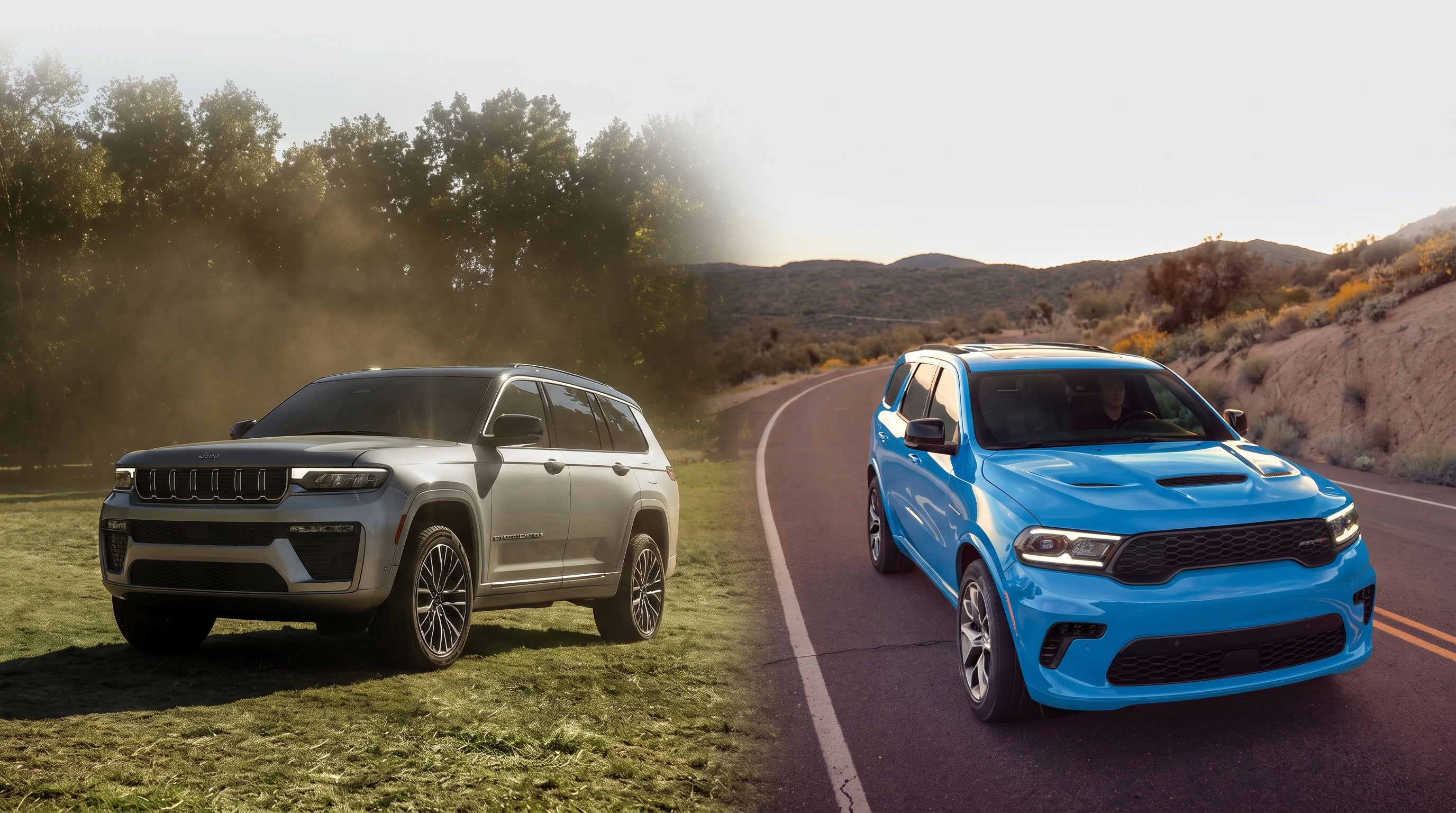
Durango vs Grand Cherokee L

2026 Dodge Durango vs Jeep Grand Cherokee L

2026 Dodge Durango vs. Jeep Grand Cherokee L: Comparing 4WD Three-Row SUVs for Wyoming Drivers Choosing a family SUV in Natrona County requires balancing passenger seating, winter capability, and trailering strength. Severe weather along Interstate 25, steep grades near South Pass, and heavy winter snowpacks mean four-wheel drive and all-wheel drive are necessity items. At Fremont Motor Casper CDJR, the 2026 Dodge Durango AWD and the 2026 Jeep Grand Cherokee L 4WD stand out as top choices for drivers who need three rows of seating matched with all-weather traction. While both vehicles feature three-row seating and full-time four-wheel-drive hardware, they serve distinct driving priorities. The Dodge Durango AWD focuses on raw engine power and high towing limits, while the Jeep Grand Cherokee L 4WD prioritizes cabin refinement, off-road ground clearance, and modern turbocharged power options. Engine Options & Mountain Highway Power Across Natrona County Power output matters when climbing high-elevation passes or passing heavy commercial vehicles against crosswinds along I-25. Both SUVs start with a proven 3.6-liter Pentastar V-6 engine, but their available powertrain upgrades branch in different directions. Powertrain Specs Comparison Feature / Spec 2026 Dodge Durango AWD 2026 Jeep Grand Cherokee L 4WD Standard Engine 3.6-Liter Pentastar V-6 3.6-Liter Pentastar V-6 Standard Output 295 hp / 260 lb-ft torque 293 hp / 260 lb-ft torque Available Upgrades 5.7L HEMI V-8 / 6.2L Supercharged V-8 2.0-Liter Hurricane Turbo 4 Upgraded Output 360 hp (5.7L) / 710 hp (6.2L) 324 hp / 332 lb-ft torque Standard Drivetrain Full-Time All-Wheel Drive Full-Time Active Four-Wheel Drive EPA-Estimated Fuel Economy (Base V-6) 18 mpg city / 25 mpg highway 18 mpg city / 25 mpg highway The 2026 Dodge Durango GT AWD uses the 3.6-liter Pentastar V-6, delivering 295 horsepower. For drivers wanting traditional muscle, the Durango GT HEMI AWD adds a 5.7-liter HEMI V-8 producing 360 horsepower and 390 lb-ft of torque, earning an EPA-estimated 14 mpg city / 21 mpg highway. At the top of the lineup, the Durango SRT Hellcat AWD features a supercharged 6.2-liter HEMI V-8 delivering 710 horsepower, with an EPA-estimated 12 mpg city / 17 mpg highway. The 2026 Jeep Grand Cherokee L 4WD pairs its standard 293-horsepower 3.6-liter V-6 with full-time active 4x4, returning an EPA-estimated 18 mpg city / 25 mpg highway. Drivers seeking swift throttle response at high elevation can choose the available 2.0-liter Hurricane Turbo 4-cylinder on trims like the Laredo Altitude, generating 324 horsepower and 332 lb-ft of torque. Direct injection and twin-scroll turbocharging help this engine maintain strong torque delivery even in thinner mountain air. Towing Capacities for Campers and Trailers If your weekend plans involve towing a camper to Pathfinder Reservoir or hauling snowmobiles into the Bighorn Mountains, trailering capacity is a key decision point. 2026 Dodge Durango AWD Towing: 3.6L V-6 AWD: Pulls up to 6,200 lbs when properly equipped. 5.7L HEMI V-8 AWD: Pulls 7,200 lbs standard, or up to 8,700 lbs when properly equipped with the Tow N Go Package. 6.2L Supercharged HEMI V-8 AWD: Pulls up to 8,700 lbs when properly equipped. 2026 Jeep Grand Cherokee L 4WD Towing: 3.6L V-6 4WD: Pulls up to 6,200 lbs when properly equipped. 2.0L Hurricane Turbo 4WD: Pulls up to 6,200 lbs when properly equipped. For heavy trailering demands, the Dodge Durango AWD holds a distinct advantage. Equipped with the Tow N Go Package on 5.7L HEMI models or standard on the SRT Hellcat, it incorporates an integrated trailer brake controller, heavy-duty engine cooling, rear load-leveling suspension, Brembo brakes, and an active two-speed transfer case to manage heavy loads up to 8,700 lbs when properly equipped. 4WD System Capability and Winter Ground Clearance on Casper Mountain Winter weather in Central Wyoming brings icy asphalt, blowing ground snow, and deep drifts on unpaved roads. Both vehicles provide four-wheel traction, but their underlying chassis engineering serves different needs. The Jeep Grand Cherokee L 4WD is engineered for deep all-weather traction and off-road clearance. Standard models provide 8.5 inches of ground clearance with multi-link independent suspension. Upgrading to the available Quadra-Lift air suspension increases ground clearance up to 10.9 inches in its highest setting. This elevation helps prevent high-centering when navigating unplowed snowdrifts near Casper Mountain or Muddy Mountain. Available 4x4 systems, such as the MP3022 two-speed transfer case, include a 2.72:1 low-range ratio for controlled low-speed traction through deep snowpack or mud. The Dodge Durango AWD focuses on high-speed highway stability and firm traction. Base AWD models utilize the MP2010 single-speed full-time transfer case with a fixed 50/50 front/rear torque split for balanced grip on slick roads. Models equipped with the 5.7L HEMI V-8 and Tow N Go Package feature the MP3025 active two-speed transfer case or the MP3010 electronic proportioning unit, paired with an electronic limited-slip rear differential and Bilstein adaptive damping suspension. With 8.0 inches of ground clearance, the Durango delivers planted, predictable control during windy, icy highway travel. Passenger Comfort and Cargo Space for Long Trips Both SUVs accommodate growing families with three rows of seating for up to seven passengers, or six passengers when equipped with second-row captain's chairs. Jeep Grand Cherokee L 4WD Interior Dimensions: Passenger Volume: 159.1 cubic feet Legroom (1st / 2nd / 3rd Row): 41.3 inches / 39.4 inches / 30.3 inches Cargo Volume: 17.2 cu. ft. behind 3rd row / 46.9 cu. ft. behind 2nd row / 84.6 cu. ft. maximum Dodge Durango AWD Interior Dimensions: Passenger Volume: 141.0 cubic feet (V-6) / 144.0 cubic feet (V-8) Legroom (1st / 2nd / 3rd Row): 40.3 inches / 38.6 inches / 33.5 inches Cargo Volume: 17.2 cu. ft. behind 3rd row / 43.3 cu. ft. behind 2nd row / 85.1 cu. ft. maximum The Grand Cherokee L 4WD provides generous second-row legroom (39.4 inches) and a total passenger cabin volume of 159.1 cubic feet, giving middle-row passengers extra stretch-out room during long trips across Wyoming. The Durango AWD counters with greater third-row legroom (33.5 inches vs. 30.3 inches) and slightly more maximum cargo space (85.1 cu. ft.), making it easier to seat older teenagers or adults in the rearmost row alongside gear bags. Both models feature the Uconnect 5 multimedia platform with standard wireless Apple CarPlay and Android Auto integration. The Durango comes standard with a 10.1-inch touchscreen, while the Grand Cherokee L offers available display configurations alongside a 10.25-inch digital gauge cluster. Find Your 4WD Three-Row SUV at Fremont Motor Casper CDJR Whether you need the muscle and 8,700-lb towing rating of the Dodge Durango AWD or the ground clearance and refined cabin of the Jeep Grand Cherokee L 4WD, both SUVs offer capably equipped options for Central Wyoming driving. Visit Fremont Motor Casper CDJR at 6101 E 2nd St in Casper, WY to compare both models in person. Our team can walk you through available four-wheel-drive hardware, seating arrangements, and factory tow packages to match your vehicle to your daily driving routine.