Blog

Things to Consider When Deciding Between a New or Used Car

Used Cars

There are lots of things to consider before purchasing a vehicle. But before you invest in a vehicle, one consideration you shouldn't ignore is whether or not you want a new vehicle or a used one. Here are 4 things you need to consider to help you decide between a new and used car.

1. Depreciation Costs

Depreciation quantifies the loss in value of an item over time. Driving the vehicle off the lot will result in immediate depreciation of 20%. According to Kelly Blue Book most new vehicles depreciate as much as 30% in the first year. A $30,000 car might lose $6,000 the minute you drive away from the dealership, and as much as $9,000 after one year. If someone asked you to throw away $9,000 you'd say they were crazy, but people do it all the time when buying a new car. Buying a used car saves you that high cost of depreciation. Another answer to this depreciation conundrum comes in the question: How long are you planning on owning it?

2. Length of Ownership

If you are planning on owning the vehicle 10 years or more than the initial loss of value becomes more palatable. As depreciation slows down over time, the actual usage of the vehicle is where your value lies. However, if you are the type of person who wants a new vehicle every three years, be prepared to absorb the 30 percent loss each time you trade your vehicle in.

3. Warranty & Repairs

Here's where the new car wins in the argument. Most manufacturers are offering significant warranties on new vehicles. Basic bumper to bumper warranties are usually 3 years or 36,000 miles. Powertrain warranties run from 5 to 10 years. Many offer extended warranty plans, some free, and some for a price. You get next to nothing on a used vehicle. These warranties are like insurance policies against your vehicle breaking down. The reliability of a new car is increased with these warranties. A used vehicle usually doesn't come with one. 

Repairing a used vehicle can cost thousands of dollars every year. Even new cars can cost up to $2,000 in maintenance and repair costs the first year. No matter how well built a car may be, things wear out. 

4. Certified Pre-Owned

Most dealers offer certified pre-owned vehicles that come with good warranties. These certified pre-owned vehicles offer the best value because of this, and you've avoided the cost of depreciation when buying a new car.

Certified pre-owned vehicles are often leased vehicles of a single owner that have been maintained by the dealership as part of the lease. Mileage tends to be lower for the years driven, and overall cosmetics are better too. Simply put, you get a better used car, better warranty, at a lower price than buying new, and better reliability than buying used off the street.

The final decision is about the money. Specifically, when do you want to spend it, how much can you afford, and on what? 

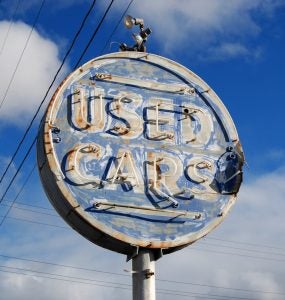
Image via Flickr by Roadsidepictures

Recommended Posts

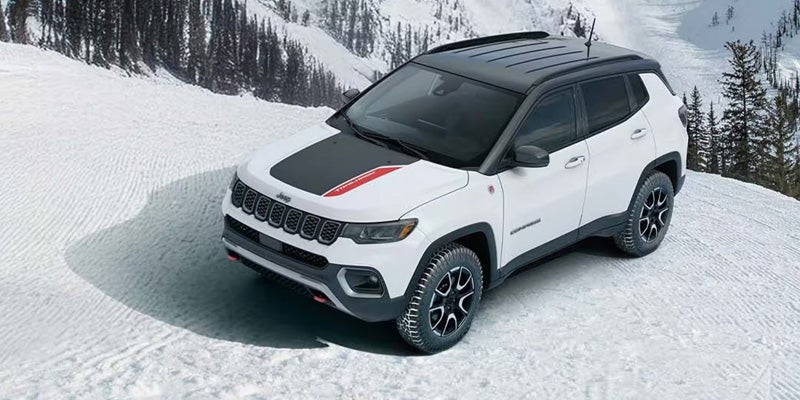
Jeep Compass in the snow

5 Cold-Weather Checks for Your Jeep in Casper

Winter in Natrona County delivers sudden sub-zero cold snaps, intense crosswinds along Interstate 25, and heavy snow accumulations on Casper Mountain. While every Jeep 4x4 comes engineered with trail-proven capability, extreme cold places severe mechanical stress on electrical components, rubber compounds, fluids, and traction hardware. Completing these five essential cold-weather inspections protects your vehicle and keeps your 4x4 operating with confidence all winter long. Quick Summary: The 5 Essential Jeep Winter Checks 1. Battery Cranking Power: Test Cold Cranking Amps (CCA) and inspect dual-battery systems before sub-zero overnight freezes. 2. 4x4 & Selec-Terrain® Verification: Confirm transfer case low-range engagement and Snow mode operation for icy Casper intersections. 3. Tire Siping & Cold PSI: Verify at least 5/32-inch tread depth and adjust tire pressures for winter temperature drops. 4. Mopar OAT Coolant Protection: Test antifreeze freeze protection down to -35 degrees Fahrenheit and check cabin heater core flow. 5. Winter Wipers & Sub-Zero Fluid: Install winter-beam blades to resist ice buildup and fill reservoirs with -30 degree washer fluid. 1. Test Battery Cold Cranking Amps (CCA) and Dual-Battery Systems Automotive battery chemistry slows down dramatically in cold weather. At 32 degrees Fahrenheit, a standard 12-volt automotive battery loses approximately 20% to 35% of its rated electrical strength. When overnight temperatures in Casper drop to -15 degrees Fahrenheit, available cranking power falls by more than 50%, precisely when thick, cold engine oil demands up to two times more energy to spin the starter motor. Jeep Dual-Battery & AGM System Demands Many modern Jeep models (including the Wrangler JL, Gladiator JT, and Grand Cherokee) utilize an advanced Stop/Start system equipped with either a secondary auxiliary battery or a high-capacity Absorbent Glass Mat (AGM) primary unit: Auxiliary Battery Isolation: If the auxiliary battery drops below its required operating voltage, it can draw parasitic power from the main starting battery, resulting in unexpected no-start conditions on cold Casper mornings. Electronic 4x4 System Dependencies: Low system voltage triggers electronic faults that can temporarily disable electric sway-bar disconnects, rear locker actuators, and Selec-Terrain drive mode selections. Professional Conductance Testing: A simple voltage test using a multimeter only reads surface charge. Our certified technicians at Fremont CDJR Casper use specialized digital conductance analyzers to measure actual Cold Cranking Amps under simulated load, pinpointing weak cells before the first major freeze. 2. Verify Jeep 4x4 Transfer Case and Selec-Terrain® Operation Driving through winter in Central Wyoming involves transitioning from dry asphalt to packed snow drifts and icy bridges across the North Platte River. Your Jeep vehicle's four-wheel-drive system relies on precise mechanical actuators and electronic control modules that need verification before winter weather hits. Exercising 4WD Hardware and Snow Mode Settings Cold temperatures thicken transfer case and differential fluids, making pre-season exercise critical: Cycle Through 4WD Modes: On a loose gravel surface or safe unpaved lot, shift your transfer case through 4H Auto, 4H Part-Time, and 4L Low. Exercising the mechanical shift collar and electric shift motor circulates synthetic lubricant and prevents the actuator from sticking during your first winter storm. Selec-Terrain® Snow Mode Calibration: On equipped Compass, Cherokee, and Grand Cherokee models, turning the Selec-Terrain dial to "Snow" configures the drivetrain specifically for slick road conditions. The system splits engine torque roughly 50/50 between front and rear axles, programs the transmission to start in second gear to minimize initial wheel spin, and recalibrates the anti-lock brake system (ABS) to detect wheel slippage early. Differential Fluid Inspection: Check front and rear differential lubricants for moisture contamination. In extreme sub-zero conditions, water-contaminated gear oil can freeze into ice crystals, starving pinion bearings of lubrication. 3. Inspect Tire Tread Depth, Winter Siping, and Cold Inflation Pressures Tires are the single physical connection between your Jeep and snow-covered Wyoming highways. While all-terrain and mud-terrain tires feature aggressive tread blocks, rubber compound hardness and tread design dictate how effectively your vehicle stops on ice. Tire Type Cold Rubber Flexibility Ice & Packed Snow Grip Recommended Casper Application Winter Tires (3PMSF-Rated) Stays flexible below -30 degrees F Maximum (high-density zigzag sipes) Daily commuting on I-25, WY-220, and Casper Mountain All-Weather (3PMSF Rated) Stays flexible below 45 degrees F High (engineered directional sipes) Year-round town and highway driving without seasonal swaps Standard All-Season Hardens below 45 degrees F Moderate to Low (slips on ice) Mild climates; requires extra stopping distance in Casper Mud-Terrain (M/T) Hardens significantly in sub-zero temps Poor on ice (large blocks lack siping) Deep snow off-road only; prone to sliding on hard-pack street ice The 5/32-Inch Winter Tread Rule & Cold Pressure Drops Keep these two tire guidelines in mind for Casper winter driving: Minimum Winter Tread Depth: While 2/32-inch is the legal wear limit in many states, winter driving requires a minimum of 5/32-inch to evacuate slush and pack snow into the sipes for traction. Anything less leaves your Jeep susceptible to hydroplaning over winter slush. The 10-Degree Pressure Rule: For every 10-degree drop in outside temperature, tire inflation pressure drops approximately 1 to 2 PSI. A Jeep parked outside during a sudden Casper temperature drop from 50 degrees down to 0 degrees can lose 5 to 8 PSI overnight, triggering the Tire Pressure Monitoring System (TPMS) light and increasing shoulder tire wear. Always check pressures in the morning when tires are cold. 4. Check Mopar OAT Engine Coolant Protection and Heating Systems Engine coolant serves a dual purpose in winter: preventing the engine block, water pump, and radiator from freezing solid, and delivering heat to the passenger cabin and defroster vents. A cracked engine block or frozen heater core is among the most expensive cold-weather mechanical failures an owner can face. Mopar OAT Coolant Specifications & Freeze Protection Using the exact factory-specified coolant is essential on modern Jeep engines: Strict Mopar OAT Purple Standard: Modern Jeep engines (such as the 3.6L Pentastar V6, 2.0L Turbo I4, and 5.7L HEMI V8) require genuine Mopar Organic Additive Technology (OAT) coolant meeting Chrysler Material Standard MS-12106. Mixing older HOAT (orange) or universal green coolant with OAT causes severe chemical precipitation, forming a silicate sludge that clogs narrow heater core passages. Refractometer Freeze Point Verification: In Central Wyoming, coolant mixtures should test to a freeze protection level of -35 degrees Fahrenheit (typically a 50/50 or 60/40 mix of Mopar OAT antifreeze to distilled water). Our service team uses optical refractometers to accurately verify ethylene glycol concentration. Thermostat & Heater Core Function: If your engine temperature gauge fluctuates or cabin vents blow lukewarm air while idling at stoplights on 2nd Street, your thermostat may be sticking open. A properly functioning cooling system should reach operating temperature (around 195 to 205 degrees Fahrenheit) within 10 minutes of driving. 5. Install Winter Wiper Blades, Sub-Zero Washer Fluid, and Condition Door Seals Winter visibility and cabin access are critical safety factors during Central Wyoming ground blizzards. Blowing snow and highway road spray from tractor-trailers along Interstate 25 can coat windshields with an opaque salt film within seconds. Winterizing Glass, Washer Pumps, and Weatherstripping Complete these final exterior checks before winter storms arrive: Frameless Beam-Style Wiper Blades: Standard metal-frame wipers feature exposed joints and pivot points that pack with ice and freeze stiff, causing the blade to lift off the windshield at highway speeds. Beam-style winter wiper blades feature a solid rubber skin that shields the tension spring from freezing, maintaining full glass contact. Sub-Zero Washer Fluid (-30°F Formula): Summer windshield wash contains high water ratios that freeze solid in reservoir tanks, split plastic tubing, and burn out electric washer pump motors. Drain or flush summer washer fluid and refill with heavy-duty de-icer fluid rated to at least -30 degrees Fahrenheit. Silicone Weatherstrip Conditioning: Jeep Wrangler and Gladiator models feature extensive rubber seals around removable hardtop panels and doors. Freezing condensation can bond rubber seals to painted metal door frames. Tugging a frozen door handle can rip expensive weatherstripping. Applying a light coat of pure silicone lubricant to rubber seals prevents moisture bonding and stops drafts. Prepare Your Jeep for Casper Winter at Fremont CDJR Our factory-trained technicians at Fremont Chrysler Dodge Jeep Ram Casper inspect your battery, 4WD system, coolant concentration, tires, and heating systems to keep you safe on Wyoming roads all season long. Schedule Winter Service Explore New 4x4 Jeeps Fremont Care: Keeping Your Vehicle Maintained Year-Round When you purchase an eligible new or pre-owned vehicle from Fremont Motor Company, Fremont Care comes with your purchase to assist with ongoing maintenance. Fremont Care provides 2 oil changes and 2 tire rotations within the initial 12 months of ownership on qualifying vehicles, helping your Jeep receive certified factory service as seasons change. Frequently Asked Questions: Winter Jeep Driving in Casper, WY When should I switch my Jeep Selec-Terrain dial to Snow mode? Switch to Snow mode whenever roads have standing slush, packed snow, or icy patches. In Snow mode, your Jeep adjusts throttle pedal sensitivity to reduce sudden wheel torque, engages a 50/50 front-to-rear power distribution, and starts the transmission in second gear to maximize initial traction from a dead stop. Why did my Jeep tire pressure warning light come on during the first freeze? Cold air contracts, causing tire pressure to drop roughly 1 to 2 PSI for every 10-degree decrease in ambient temperature. If your tires were set to 36 PSI at 60 degrees, a morning drop to 10 degrees can lower pressure to 30 PSI, triggering the TPMS dashboard alert. Inspect cold pressures and inflate to the door-jamb specification. Can I mix different coolant colors in my modern Jeep? No. Modern Jeep vehicles use purple Mopar OAT coolant (MS-12106). Mixing OAT coolant with green conventional or orange HOAT coolant causes chemical precipitation, forming a thick gel that permanently plugs heater cores, restricts radiator flow, and leads to engine overheating. Where can I get a certified winter inspection for my Jeep in Casper? You can schedule a winter mechanical inspection with our certified technicians at Fremont Chrysler Dodge Jeep Ram Casper, located at 6101 E 2nd St, Casper, WY 82609. You can book an appointment online or contact our service department directly. Service & Maintenance Disclosures: Cold-weather inspection items and specifications cited are based on factory maintenance schedules for modern Jeep vehicles. Severe driving conditions (frequent short trips below freezing, extended idling, mountain driving) may require more frequent service intervals. Fremont Care comes with eligible vehicle purchases and provides 2 oil changes and 2 tire rotations within the initial 12 months of ownership on qualifying vehicles. Visit Fremont Chrysler Dodge Jeep Ram Casper at 6101 E 2nd St, Casper, WY 82609 for full program terms and vehicle eligibility details.

Durango vs Grand Cherokee L

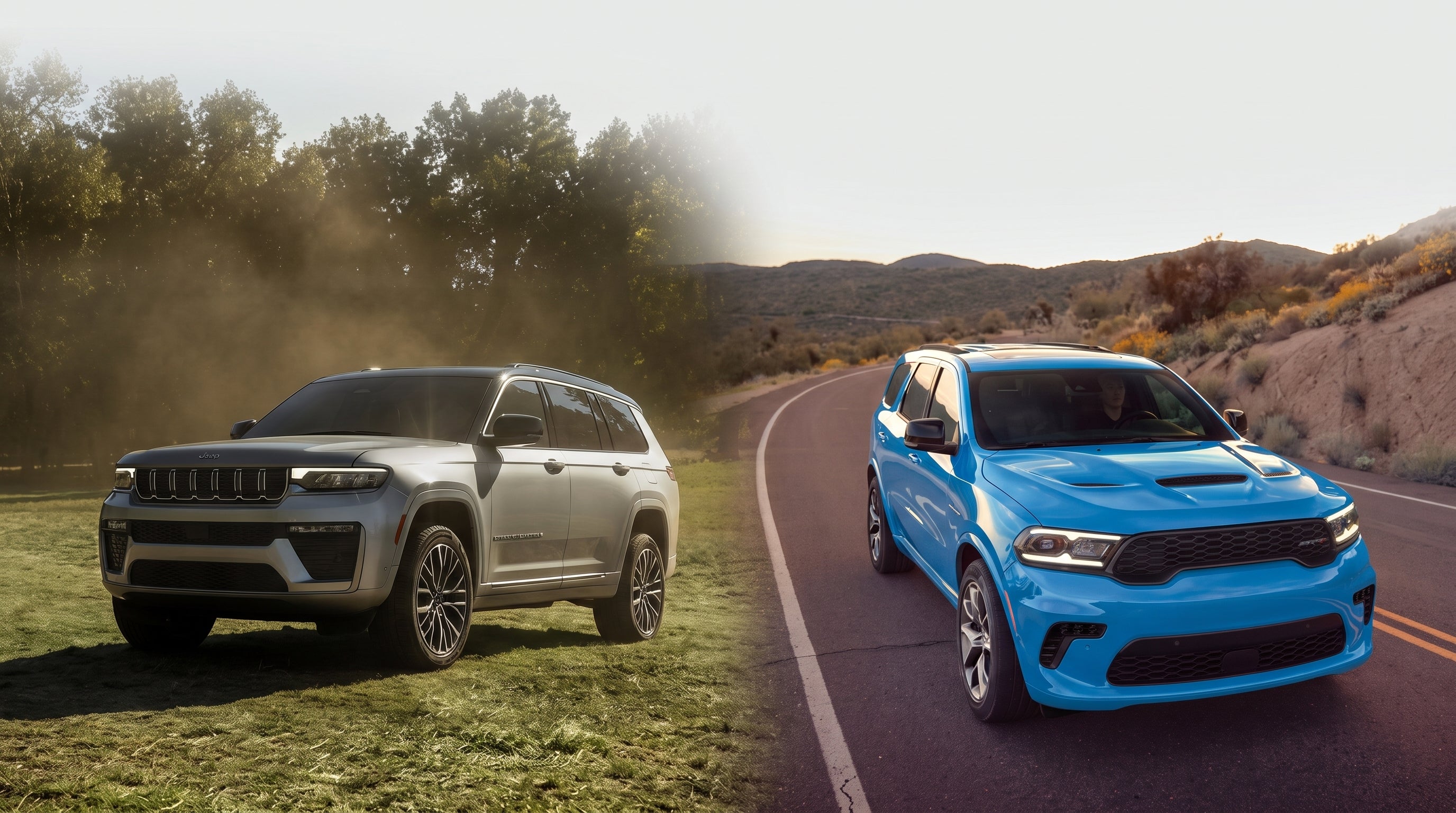
2026 Dodge Durango vs Jeep Grand Cherokee L

2026 Dodge Durango vs. Jeep Grand Cherokee L: Comparing 4WD Three-Row SUVs for Wyoming Drivers Choosing a family SUV in Natrona County requires balancing passenger seating, winter capability, and trailering strength. Severe weather along Interstate 25, steep grades near South Pass, and heavy winter snowpacks mean four-wheel drive and all-wheel drive are necessity items. At Fremont Motor Casper CDJR, the 2026 Dodge Durango AWD and the 2026 Jeep Grand Cherokee L 4WD stand out as top choices for drivers who need three rows of seating matched with all-weather traction. While both vehicles feature three-row seating and full-time four-wheel-drive hardware, they serve distinct driving priorities. The Dodge Durango AWD focuses on raw engine power and high towing limits, while the Jeep Grand Cherokee L 4WD prioritizes cabin refinement, off-road ground clearance, and modern turbocharged power options. Engine Options & Mountain Highway Power Across Natrona County Power output matters when climbing high-elevation passes or passing heavy commercial vehicles against crosswinds along I-25. Both SUVs start with a proven 3.6-liter Pentastar V-6 engine, but their available powertrain upgrades branch in different directions. Powertrain Specs Comparison Feature / Spec 2026 Dodge Durango AWD 2026 Jeep Grand Cherokee L 4WD Standard Engine 3.6-Liter Pentastar V-6 3.6-Liter Pentastar V-6 Standard Output 295 hp / 260 lb-ft torque 293 hp / 260 lb-ft torque Available Upgrades 5.7L HEMI V-8 / 6.2L Supercharged V-8 2.0-Liter Hurricane Turbo 4 Upgraded Output 360 hp (5.7L) / 710 hp (6.2L) 324 hp / 332 lb-ft torque Standard Drivetrain Full-Time All-Wheel Drive Full-Time Active Four-Wheel Drive EPA-Estimated Fuel Economy (Base V-6) 18 mpg city / 25 mpg highway 18 mpg city / 25 mpg highway The 2026 Dodge Durango GT AWD uses the 3.6-liter Pentastar V-6, delivering 295 horsepower. For drivers wanting traditional muscle, the Durango GT HEMI AWD adds a 5.7-liter HEMI V-8 producing 360 horsepower and 390 lb-ft of torque, earning an EPA-estimated 14 mpg city / 21 mpg highway. At the top of the lineup, the Durango SRT Hellcat AWD features a supercharged 6.2-liter HEMI V-8 delivering 710 horsepower, with an EPA-estimated 12 mpg city / 17 mpg highway. The 2026 Jeep Grand Cherokee L 4WD pairs its standard 293-horsepower 3.6-liter V-6 with full-time active 4x4, returning an EPA-estimated 18 mpg city / 25 mpg highway. Drivers seeking swift throttle response at high elevation can choose the available 2.0-liter Hurricane Turbo 4-cylinder on trims like the Laredo Altitude, generating 324 horsepower and 332 lb-ft of torque. Direct injection and twin-scroll turbocharging help this engine maintain strong torque delivery even in thinner mountain air. Towing Capacities for Campers and Trailers If your weekend plans involve towing a camper to Pathfinder Reservoir or hauling snowmobiles into the Bighorn Mountains, trailering capacity is a key decision point. 2026 Dodge Durango AWD Towing: 3.6L V-6 AWD: Pulls up to 6,200 lbs when properly equipped. 5.7L HEMI V-8 AWD: Pulls 7,200 lbs standard, or up to 8,700 lbs when properly equipped with the Tow N Go Package. 6.2L Supercharged HEMI V-8 AWD: Pulls up to 8,700 lbs when properly equipped. 2026 Jeep Grand Cherokee L 4WD Towing: 3.6L V-6 4WD: Pulls up to 6,200 lbs when properly equipped. 2.0L Hurricane Turbo 4WD: Pulls up to 6,200 lbs when properly equipped. For heavy trailering demands, the Dodge Durango AWD holds a distinct advantage. Equipped with the Tow N Go Package on 5.7L HEMI models or standard on the SRT Hellcat, it incorporates an integrated trailer brake controller, heavy-duty engine cooling, rear load-leveling suspension, Brembo brakes, and an active two-speed transfer case to manage heavy loads up to 8,700 lbs when properly equipped. 4WD System Capability and Winter Ground Clearance on Casper Mountain Winter weather in Central Wyoming brings icy asphalt, blowing ground snow, and deep drifts on unpaved roads. Both vehicles provide four-wheel traction, but their underlying chassis engineering serves different needs. The Jeep Grand Cherokee L 4WD is engineered for deep all-weather traction and off-road clearance. Standard models provide 8.5 inches of ground clearance with multi-link independent suspension. Upgrading to the available Quadra-Lift air suspension increases ground clearance up to 10.9 inches in its highest setting. This elevation helps prevent high-centering when navigating unplowed snowdrifts near Casper Mountain or Muddy Mountain. Available 4x4 systems, such as the MP3022 two-speed transfer case, include a 2.72:1 low-range ratio for controlled low-speed traction through deep snowpack or mud. The Dodge Durango AWD focuses on high-speed highway stability and firm traction. Base AWD models utilize the MP2010 single-speed full-time transfer case with a fixed 50/50 front/rear torque split for balanced grip on slick roads. Models equipped with the 5.7L HEMI V-8 and Tow N Go Package feature the MP3025 active two-speed transfer case or the MP3010 electronic proportioning unit, paired with an electronic limited-slip rear differential and Bilstein adaptive damping suspension. With 8.0 inches of ground clearance, the Durango delivers planted, predictable control during windy, icy highway travel. Passenger Comfort and Cargo Space for Long Trips Both SUVs accommodate growing families with three rows of seating for up to seven passengers, or six passengers when equipped with second-row captain's chairs. Jeep Grand Cherokee L 4WD Interior Dimensions: Passenger Volume: 159.1 cubic feet Legroom (1st / 2nd / 3rd Row): 41.3 inches / 39.4 inches / 30.3 inches Cargo Volume: 17.2 cu. ft. behind 3rd row / 46.9 cu. ft. behind 2nd row / 84.6 cu. ft. maximum Dodge Durango AWD Interior Dimensions: Passenger Volume: 141.0 cubic feet (V-6) / 144.0 cubic feet (V-8) Legroom (1st / 2nd / 3rd Row): 40.3 inches / 38.6 inches / 33.5 inches Cargo Volume: 17.2 cu. ft. behind 3rd row / 43.3 cu. ft. behind 2nd row / 85.1 cu. ft. maximum The Grand Cherokee L 4WD provides generous second-row legroom (39.4 inches) and a total passenger cabin volume of 159.1 cubic feet, giving middle-row passengers extra stretch-out room during long trips across Wyoming. The Durango AWD counters with greater third-row legroom (33.5 inches vs. 30.3 inches) and slightly more maximum cargo space (85.1 cu. ft.), making it easier to seat older teenagers or adults in the rearmost row alongside gear bags. Both models feature the Uconnect 5 multimedia platform with standard wireless Apple CarPlay and Android Auto integration. The Durango comes standard with a 10.1-inch touchscreen, while the Grand Cherokee L offers available display configurations alongside a 10.25-inch digital gauge cluster. Find Your 4WD Three-Row SUV at Fremont Motor Casper CDJR Whether you need the muscle and 8,700-lb towing rating of the Dodge Durango AWD or the ground clearance and refined cabin of the Jeep Grand Cherokee L 4WD, both SUVs offer capably equipped options for Central Wyoming driving. Visit Fremont Motor Casper CDJR at 6101 E 2nd St in Casper, WY to compare both models in person. Our team can walk you through available four-wheel-drive hardware, seating arrangements, and factory tow packages to match your vehicle to your daily driving routine.

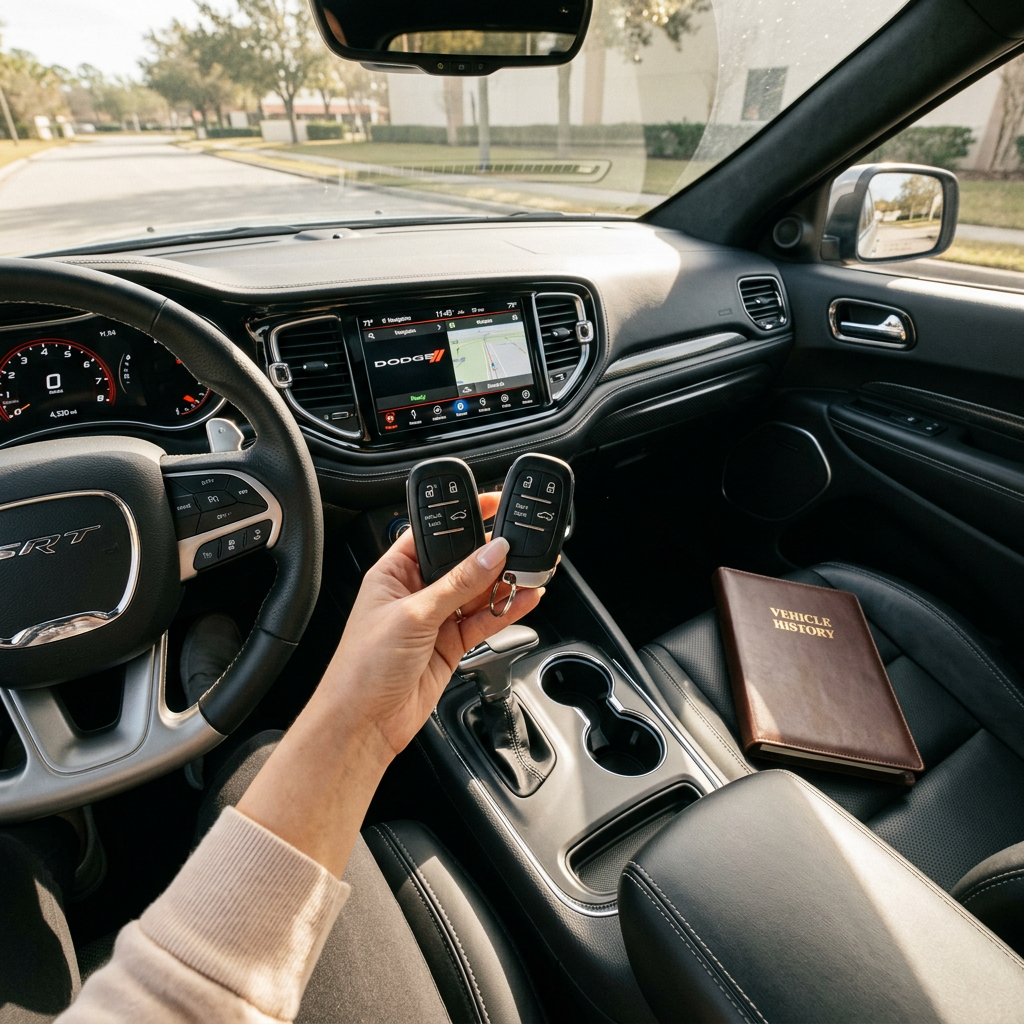
A person holding two key fobs inside a Dodge SRT vehicle, with a vehicle history binder on the passenger seat. (Representative image for illustration purposes only. Actual vehicle may vary based on trim and configuration.)

Proven Ways to Increase Your Wyoming Vehicle Trade-In Value

Preparing a vehicle for a dealership appraisal is one of the most direct ways to secure a higher offer. When our team evaluates a vehicle, we look at the overall presentation alongside mechanical and physical condition. Taking a few deliberate steps before bringing your vehicle to our showroom can prevent common deductions and help you get the highest possible return. A thorough interior and exterior cleaning is the easiest way to improve your vehicle's presentation. A clean car suggests responsible ownership and makes it easier for our appraisers to evaluate the true condition of the paint and upholstery. Removing personal items from the glove box, center console, and cargo areas allows for a seamless inspection. It is also wise to delete your personal data, saved addresses, and paired phones from the infotainment system to protect your privacy before handing over the keys. Addressing inexpensive, minor cosmetic issues can also prevent appraisers from deducting reconditioning costs from your offer. Replacing a burned-out bulb, installing fresh wiper blades, or topping off essential fluids are low-cost steps that signal the vehicle has been well-maintained. While major bodywork or expensive mechanical overhauls are rarely worth the retail cost right before a trade, fixing small chips or securing loose trim pieces can protect your vehicle's bottom line. If you want to explore upgrading your ride, you can browse our selection of new vehicles online or use our online tool to value your trade-in from home. Table of Contents How to Quickly Estimate What Your Car is Worth Before Visiting the Lot Comparing Online Trade-In Estimates to Private Party Cash Values Why Local Wyoming Demand and Regional Inventory Shape Your Offer The Essential Paperwork and Items to Bring for a Maximum Valuation Why You Should Negotiate Your Trade-In Separately From Your New Purchase How Sales Tax Credits on Vehicle Trade-Ins Can Lower Your Overall Purchase Cost Quick Answers Before You Visit Maximize Your Buying Power at Fremont Casper CDJR How to Quickly Estimate What Your Car is Worth Before Visiting the Lot Establishing a realistic baseline value for your used vehicle before visiting a dealership ensures you enter negotiations with clear, data-backed expectations. Online appraisal tools are highly accessible resources that provide immediate estimates based on historical market transactions. By entering specific details about your vehicle, you can generate a reliable pricing bracket in just a few minutes. Most digital valuation platforms require your vehicle identification number (VIN) or license plate, alongside accurate mileage, color, options, and overall condition. It is important to be highly objective when selecting the condition tier. Very few vehicles qualify as pristine, so selecting a realistic condition category ensures your online estimate aligns closely with what an in-person appraiser will observe on our lot. When shoppers call our desk to ask how they can quickly find out what their car is worth before trading it in, we always suggest starting with our online tools to establish a solid baseline. This initial estimate serves as a helpful guide as you begin researching your next purchase. Once you have a firm grasp of your current vehicle's estimated value, you can confidently explore our diverse inventory of used vehicles to find a model that fits your budget and driving needs. Comparing Online Trade-In Estimates to Private Party Cash Values Selling a vehicle directly to a private buyer typically yields a higher gross dollar amount than trading it in at a dealership, but this difference comes with distinct operational trade-offs. The gap between private party value and trade-in value generally ranges from $1,000 to $4,000. Understanding why this pricing spread exists allows you to make an informed decision about which route best fits your schedule and financial goals. A private buyer pays a retail-adjacent price because they are the end consumer purchasing the vehicle for personal use. In contrast, a dealership must factor in the overhead costs of reconditioning, detailing, safety inspections, marketing, and physical lot space before reselling the vehicle. If a vehicle has high mileage or significant wear, a dealer may choose to wholesale it at auction, which carries additional transport and transaction fees that naturally lower the initial trade-in offer. The convenience of a trade-in often offsets the gross price difference for busy buyers. A private sale requires listing the vehicle, responding to inquiries, scheduling test drives with strangers, and handling complex title transfer paperwork. Trading in your vehicle at our dealership consolidates the entire process into a single, secure transaction completed in under an hour. To see how your estimated trade-in value fits into your monthly budget, you can utilize our online payment calculator to model different purchase scenarios. Why Local Wyoming Demand and Regional Inventory Shape Your Offer Local Casper and Wyoming market dynamics and seasonal demand play a powerful role in determining the final appraisal value of your vehicle. National online valuation tools rely on broad, algorithmically generated data that often fails to capture regional preferences and immediate inventory shortages. Dealers base their physical appraisals on real-time wholesale transaction data within the immediate region to ensure the vehicles they acquire align with local buyer needs. On the high plains plateaus, and mountains around Wyoming, where ranching roots and strong winds require heavy-duty towing power, a used four-wheel drive truck with a high towing capacity commands a premium that national algorithms often miss. Conversely, a rear-wheel drive coupe may see softer demand in regions prone to sudden weather shifts. Seasonal timing also influences these numbers, as demand for capable utility vehicles typically rises ahead of late-season storms, while smaller commuter options may peak during different economic cycles. When regional used inventory is exceptionally tight, dealerships compete more aggressively for quality trade-ins, which can drive up the value of your vehicle. This localized demand is particularly influential for specialized segments. If you are looking to transition your current vehicle into a commercial asset, you can explore our dedicated selection of fleet and commercial vehicles to find a heavy-duty option built for demanding work environments. The Essential Paperwork and Items to Bring for a Maximum Valuation Arriving at the dealership with a complete set of physical items and documents prevents the appraisal from being delayed or discounted. Missing components like spare keys or title documentation can directly reduce a trade-in offer because the dealership must absorb the cost of replacing them before the vehicle can be resold. Organizing these items in advance demonstrates responsible ownership and streamlines the entire transaction. You should compile a complete folder of your vehicle's history, including: The physical vehicle title (if the loan is fully paid off) or current lienholder payoff information The active vehicle registration and a valid driver's license Detailed service records showing routine oil changes, tire rotations, and completed recall work Both sets of factory keys or key fobs, which can cost hundreds of dollars to replace if missing Original vehicle accessories, such as the owner's manual, cargo covers, or specialized floor mats Providing a clear, paper-backed service history reduces the perceived risk for our appraisers and can support a stronger final offer. If you are trading in a vehicle to transition into a more budget-friendly option, having your paperwork fully prepared makes it easy to apply your equity toward our inventory of vehicles under $20k. Why You Should Negotiate Your Trade-In Separately From Your New Purchase Keeping the trade-in valuation and the purchase price of your next vehicle as two distinct transactions prevents confusion and ensures total transparency. When these two elements are bundled together too early in the conversation, it becomes difficult to track the actual Wyoming vehicle trade-in value of each component. Treating them as separate deals allows you to evaluate the true merit of both the trade-in offer and the purchase price. For drivers navigating the steep mountain passes around Jackson, upgrading to a vehicle with advanced all-wheel drive or modern winter-ready features is a priority, but keeping the trade-in separate ensures those upgrades are negotiated on a clean slate. Once the purchase price of your next vehicle is locked in, you can introduce your trade-in to see exactly how much it lowers your overall out-of-pocket cost. This clear approach is highly beneficial whether you are looking at traditional models or browsing our latest new electric and hybrid vehicles. How Sales Tax Credits on Vehicle Trade-Ins Can Lower Your Overall Purchase Cost The state of Wyoming offers a direct financial incentive for trading in a vehicle rather than selling it privately. When you trade in a vehicle and purchase another one in a single transaction, you only pay state sales tax on the net difference between the two vehicles. This tax credit can narrow or completely eliminate the financial gap between a dealer trade-in offer and a private sale. For example, if you purchase a vehicle for $30,000 and receive a trade-in allowance of $10,000, your taxable purchase price is reduced to $20,000. In a county with a 5% sales tax rate, you would pay $1,000 in sales tax instead of $1,500, resulting in an immediate savings of $500. If you were to sell your vehicle privately, you would lose this tax advantage entirely and owe sales tax on the full $30,000 purchase price. Calculating the after-tax value of your trade-in provides a much more accurate comparison than simply looking at the gross offer. To see how these tax advantages apply to your next vehicle purchase, stop by our showroom to speak with our finance team. Quick Answers Before You Visit Q: Do aftermarket modifications like lift kits or custom wheels increase my trade-in value? Aftermarket modifications rarely return their retail cost during an appraisal and can sometimes lower your trade-in value. Many buyers prefer vehicles in factory-standard condition, meaning heavily modified vehicles may require extra reconditioning to return them to stock before they can be resold. Q: What happens to my trade-in offer if there is an active manufacturer safety recall on my car? An active safety recall does not prevent you from trading in your vehicle, but it must be addressed. Because franchised dealerships can perform manufacturer-authorized recall repairs, we can typically resolve the issue during our reconditioning process, though it is helpful to disclose any open recalls upfront. Q: Can I trade in a vehicle if the registration has expired? Yes, you can trade in a vehicle with an expired registration. The registration status does not affect the physical value of the vehicle, though you must still provide proof of ownership, such as a valid title, to complete the transfer of ownership legally. Q: How long is a written dealership trade-in appraisal valid? Most written trade-in appraisals are valid for seven days or a specific mileage limit, such as 500 additional miles. This window gives you time to finalize your purchase decision while protecting the dealership against sudden shifts in the used vehicle market or physical changes to the car. Q: What should I do if I owe more on my auto loan than my trade-in is worth? This situation is known as negative equity, or being upsides down or, underwater on your loan. You can either pay the difference directly to satisfy the lien or, subject to lender approval, roll the remaining balance into the financing of your next vehicle purchase. Maximize Your Buying Power at Fremont Casper Chrysler Dodge Jeep RAM Securing the best possible value for your trade-in is a practical process of preparation, documentation, and understanding local market demand. By taking the time to clean your vehicle, organize your maintenance records, and negotiate your trade-in as a standalone deal, you can maximize your purchasing power and lower your monthly payments. Our team is committed to providing transparent, straightforward appraisals that reflect the true value of your vehicle in our local market. When you are ready to take the next step, our finance and sales professionals are here to help you navigate the transition. We invite you to utilize our online valuation tools to get a preliminary estimate, browse our extensive inventory of cars, trucks, and SUVs, and visit our showroom to experience a hassle-free appraisal process. Let us help you turn your current vehicle into a competitive advantage for your next purchase.