



Preparing a vehicle for a dealership appraisal is one of the most direct ways to secure a higher offer. When our team evaluates a vehicle, we look at the overall presentation alongside mechanical and physical condition. Taking a few deliberate steps before bringing your vehicle to our showroom can prevent common deductions and help you get the highest possible return.
A thorough interior and exterior cleaning is the easiest way to improve your vehicle’s presentation. A clean car suggests responsible ownership and makes it easier for our appraisers to evaluate the true condition of the paint and upholstery. Removing personal items from the glove box, center console, and cargo areas allows for a seamless inspection. It is also wise to delete your personal data, saved addresses, and paired phones from the infotainment system to protect your privacy before handing over the keys.
Addressing inexpensive, minor cosmetic issues can also prevent appraisers from deducting reconditioning costs from your offer. Replacing a burned-out bulb, installing fresh wiper blades, or topping off essential fluids are low-cost steps that signal the vehicle has been well-maintained. While major bodywork or expensive mechanical overhauls are rarely worth the retail cost right before a trade, fixing small chips or securing loose trim pieces can protect your vehicle’s bottom line.
If you want to explore upgrading your ride, you can browse our selection of new vehicles online or use our online tool to value your trade-in from home.
Table of Contents
- How to Quickly Estimate What Your Car is Worth Before Visiting the Lot
- Comparing Online Trade-In Estimates to Private Party Cash Values
- Why Local Wyoming Demand and Regional Inventory Shape Your Offer
- The Essential Paperwork and Items to Bring for a Maximum Valuation
- Why You Should Negotiate Your Trade-In Separately From Your New Purchase
- How Sales Tax Credits on Vehicle Trade-Ins Can Lower Your Overall Purchase Cost
- Quick Answers Before You Visit
- Maximize Your Buying Power at Fremont Casper CDJR
How to Quickly Estimate What Your Car is Worth Before Visiting the Lot
Establishing a realistic baseline value for your used vehicle before visiting a dealership ensures you enter negotiations with clear, data-backed expectations. Online appraisal tools are highly accessible resources that provide immediate estimates based on historical market transactions. By entering specific details about your vehicle, you can generate a reliable pricing bracket in just a few minutes.
Most digital valuation platforms require your vehicle identification number (VIN) or license plate, alongside accurate mileage, color, options, and overall condition. It is important to be highly objective when selecting the condition tier. Very few vehicles qualify as pristine, so selecting a realistic condition category ensures your online estimate aligns closely with what an in-person appraiser will observe on our lot.
When shoppers call our desk to ask how they can quickly find out what their car is worth before trading it in, we always suggest starting with our online tools to establish a solid baseline. This initial estimate serves as a helpful guide as you begin researching your next purchase. Once you have a firm grasp of your current vehicle’s estimated value, you can confidently explore our diverse inventory of used vehicles to find a model that fits your budget and driving needs.
Comparing Online Trade-In Estimates to Private Party Cash Values
Selling a vehicle directly to a private buyer typically yields a higher gross dollar amount than trading it in at a dealership, but this difference comes with distinct operational trade-offs. The gap between private party value and trade-in value generally ranges from $1,000 to $4,000. Understanding why this pricing spread exists allows you to make an informed decision about which route best fits your schedule and financial goals.
A private buyer pays a retail-adjacent price because they are the end consumer purchasing the vehicle for personal use. In contrast, a dealership must factor in the overhead costs of reconditioning, detailing, safety inspections, marketing, and physical lot space before reselling the vehicle. If a vehicle has high mileage or significant wear, a dealer may choose to wholesale it at auction, which carries additional transport and transaction fees that naturally lower the initial trade-in offer.
The convenience of a trade-in often offsets the gross price difference for busy buyers. A private sale requires listing the vehicle, responding to inquiries, scheduling test drives with strangers, and handling complex title transfer paperwork. Trading in your vehicle at our dealership consolidates the entire process into a single, secure transaction completed in under an hour. To see how your estimated trade-in value fits into your monthly budget, you can utilize our online payment calculator to model different purchase scenarios.
Why Local Wyoming Demand and Regional Inventory Shape Your Offer
Local Casper and Wyoming market dynamics and seasonal demand play a powerful role in determining the final appraisal value of your vehicle. National online valuation tools rely on broad, algorithmically generated data that often fails to capture regional preferences and immediate inventory shortages. Dealers base their physical appraisals on real-time wholesale transaction data within the immediate region to ensure the vehicles they acquire align with local buyer needs.
On the high plains plateaus, and mountains around Wyoming, where ranching roots and strong winds require heavy-duty towing power, a used four-wheel drive truck with a high towing capacity commands a premium that national algorithms often miss. Conversely, a rear-wheel drive coupe may see softer demand in regions prone to sudden weather shifts. Seasonal timing also influences these numbers, as demand for capable utility vehicles typically rises ahead of late-season storms, while smaller commuter options may peak during different economic cycles.
When regional used inventory is exceptionally tight, dealerships compete more aggressively for quality trade-ins, which can drive up the value of your vehicle. This localized demand is particularly influential for specialized segments. If you are looking to transition your current vehicle into a commercial asset, you can explore our dedicated selection of fleet and commercial vehicles to find a heavy-duty option built for demanding work environments.
The Essential Paperwork and Items to Bring for a Maximum Valuation
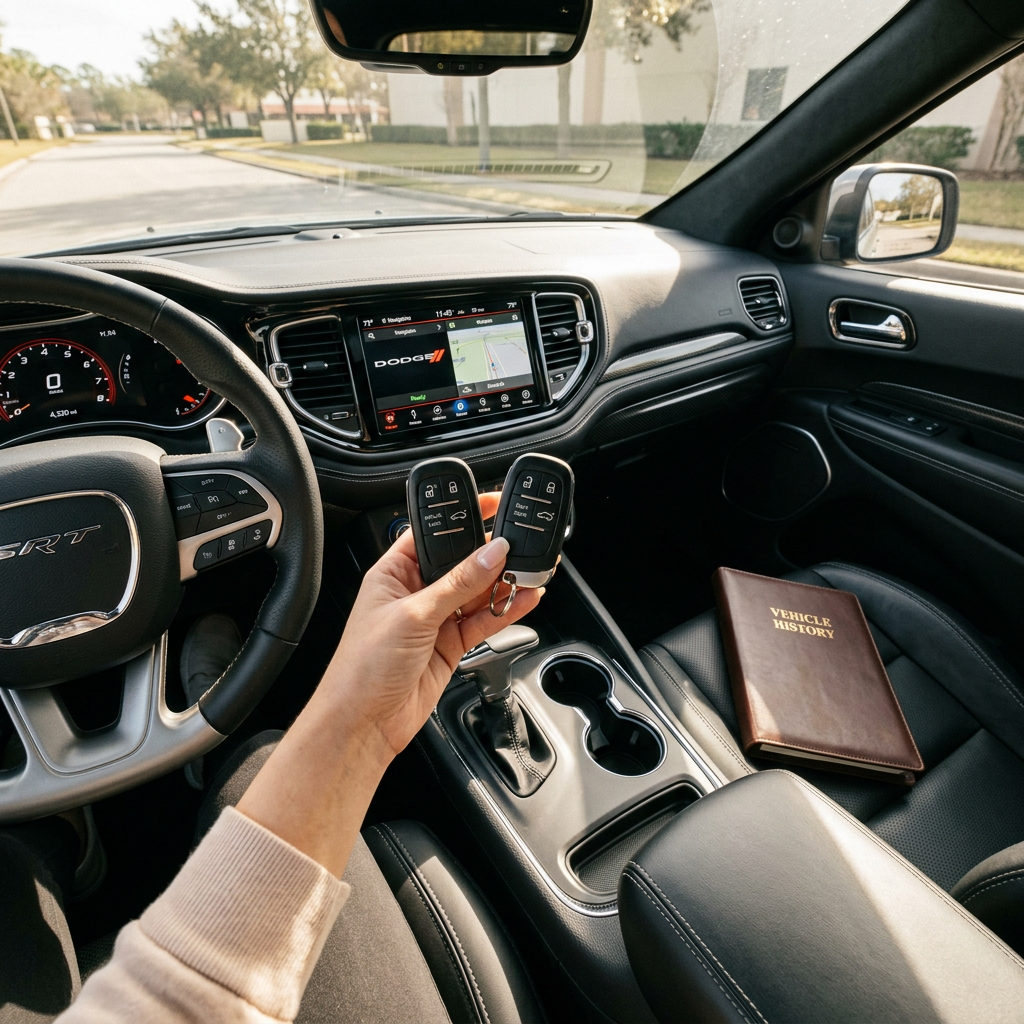
Arriving at the dealership with a complete set of physical items and documents prevents the appraisal from being delayed or discounted. Missing components like spare keys or title documentation can directly reduce a trade-in offer because the dealership must absorb the cost of replacing them before the vehicle can be resold. Organizing these items in advance demonstrates responsible ownership and streamlines the entire transaction.
You should compile a complete folder of your vehicle’s history, including:
- The physical vehicle title (if the loan is fully paid off) or current lienholder payoff information
- The active vehicle registration and a valid driver’s license
- Detailed service records showing routine oil changes, tire rotations, and completed recall work
- Both sets of factory keys or key fobs, which can cost hundreds of dollars to replace if missing
- Original vehicle accessories, such as the owner’s manual, cargo covers, or specialized floor mats
Providing a clear, paper-backed service history reduces the perceived risk for our appraisers and can support a stronger final offer. If you are trading in a vehicle to transition into a more budget-friendly option, having your paperwork fully prepared makes it easy to apply your equity toward our inventory of vehicles under $20k.
Why You Should Negotiate Your Trade-In Separately From Your New Purchase
Keeping the trade-in valuation and the purchase price of your next vehicle as two distinct transactions prevents confusion and ensures total transparency. When these two elements are bundled together too early in the conversation, it becomes difficult to track the actual Wyoming vehicle trade-in value of each component. Treating them as separate deals allows you to evaluate the true merit of both the trade-in offer and the purchase price.
For drivers navigating the steep mountain passes around Jackson, upgrading to a vehicle with advanced all-wheel drive or modern winter-ready features is a priority, but keeping the trade-in separate ensures those upgrades are negotiated on a clean slate. Once the purchase price of your next vehicle is locked in, you can introduce your trade-in to see exactly how much it lowers your overall out-of-pocket cost. This clear approach is highly beneficial whether you are looking at traditional models or browsing our latest new electric and hybrid vehicles.
How Sales Tax Credits on Vehicle Trade-Ins Can Lower Your Overall Purchase Cost
The state of Wyoming offers a direct financial incentive for trading in a vehicle rather than selling it privately. When you trade in a vehicle and purchase another one in a single transaction, you only pay state sales tax on the net difference between the two vehicles. This tax credit can narrow or completely eliminate the financial gap between a dealer trade-in offer and a private sale.
For example, if you purchase a vehicle for $30,000 and receive a trade-in allowance of $10,000, your taxable purchase price is reduced to $20,000. In a county with a 5% sales tax rate, you would pay $1,000 in sales tax instead of $1,500, resulting in an immediate savings of $500. If you were to sell your vehicle privately, you would lose this tax advantage entirely and owe sales tax on the full $30,000 purchase price.
Calculating the after-tax value of your trade-in provides a much more accurate comparison than simply looking at the gross offer. To see how these tax advantages apply to your next vehicle purchase, stop by our showroom to speak with our finance team.
Quick Answers Before You Visit
Q: Do aftermarket modifications like lift kits or custom wheels increase my trade-in value?
Aftermarket modifications rarely return their retail cost during an appraisal and can sometimes lower your trade-in value. Many buyers prefer vehicles in factory-standard condition, meaning heavily modified vehicles may require extra reconditioning to return them to stock before they can be resold.
Q: What happens to my trade-in offer if there is an active manufacturer safety recall on my car?
An active safety recall does not prevent you from trading in your vehicle, but it must be addressed. Because franchised dealerships can perform manufacturer-authorized recall repairs, we can typically resolve the issue during our reconditioning process, though it is helpful to disclose any open recalls upfront.
Q: Can I trade in a vehicle if the registration has expired?
Yes, you can trade in a vehicle with an expired registration. The registration status does not affect the physical value of the vehicle, though you must still provide proof of ownership, such as a valid title, to complete the transfer of ownership legally.
Q: How long is a written dealership trade-in appraisal valid?
Most written trade-in appraisals are valid for seven days or a specific mileage limit, such as 500 additional miles. This window gives you time to finalize your purchase decision while protecting the dealership against sudden shifts in the used vehicle market or physical changes to the car.
Q: What should I do if I owe more on my auto loan than my trade-in is worth?
This situation is known as negative equity, or being upsides down or, underwater on your loan. You can either pay the difference directly to satisfy the lien or, subject to lender approval, roll the remaining balance into the financing of your next vehicle purchase.
Maximize Your Buying Power at Fremont Casper Chrysler Dodge Jeep RAM
Securing the best possible value for your trade-in is a practical process of preparation, documentation, and understanding local market demand. By taking the time to clean your vehicle, organize your maintenance records, and negotiate your trade-in as a standalone deal, you can maximize your purchasing power and lower your monthly payments. Our team is committed to providing transparent, straightforward appraisals that reflect the true value of your vehicle in our local market.
When you are ready to take the next step, our finance and sales professionals are here to help you navigate the transition. We invite you to utilize our online valuation tools to get a preliminary estimate, browse our extensive inventory of cars, trucks, and SUVs, and visit our showroom to experience a hassle-free appraisal process. Let us help you turn your current vehicle into a competitive advantage for your next purchase.
Connect with us


